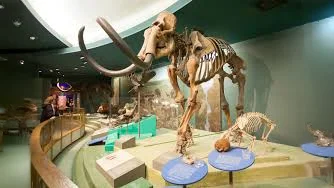
At the university where I work, I often find myself digging in the dirt alongside archaeologists. Their task is to recover fragments of the past—pottery shards, stone tools, traces of vanished lives—so we might better understand who we are and where we came from.
Astronomy offers a similar kind of excavation, though its artifacts arrive not from the soil but from the sky. When we study the stars, we are quite literally looking backward in time. Light, traveling across vast distances, carries with it the history of the universe, allowing us to glimpse cosmic events long past even as they unfold before our eyes.
This past weekend, my wife and I joined two friends—one a chemist, the other a musician—in the Jemez Mountains to watch the annual Geminids meteor shower. Under a cold, clear sky, we lay back and watched brief streaks of fire flare and vanish, each one a reminder of both the fragility and grandeur of the cosmos.
The Geminids originate from debris shed by asteroid 3200 Phaethon, their paths tracing back to the constellation Gemini. Unlike many meteor showers born of comets, the Geminids’ rocky parent body makes them especially bright—tiny remnants of the solar system burning briefly as they meet Earth’s atmosphere.
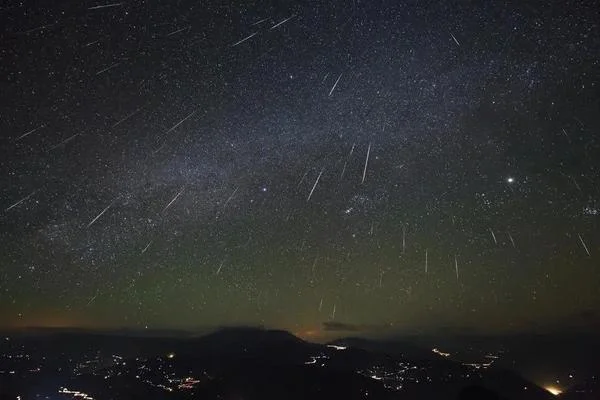 Geminids meteor shower. Photo credit: NASA
As I stared upward, I was struck not only by the beauty overhead but by the good fortune of living in New Mexico, a place where dark skies and high elevations make astronomical wonder part of the cultural landscape. The state is home to a remarkable network of clubs, observatories, and research institutions that invite professionals and amateurs alike to engage the night sky.
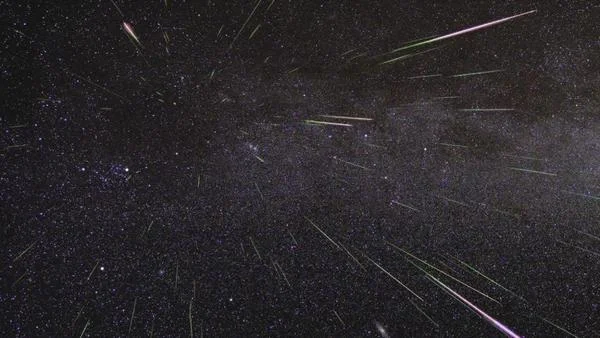 Geminids meteor shower. Photo credit: NASA
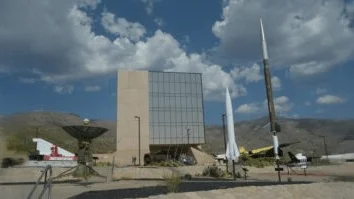
Among them are the Albuquerque Astronomical Society and the Santa Fe Stargazers, both dedicated to public education and observation. University observatories in Albuquerque and Las Cruces offer access to powerful telescopes, including the Tombaugh Observatory—named for Clyde Tombaugh, the New Mexico–based astronomer who discovered Pluto. Looming larger still is the Very Large Array, where radio dishes spread across the desert listen to the faint whispers of the universe.
In a world often crowded with noise and light, New Mexico reminds us that knowledge sometimes begins in silence—lying beneath the stars, watching the past blaze briefly across the present.
- The Albuquerque Astronomical Society (TAAS) — taas.org
With the tagline “observe, educate, and have fun,” TAAS offers regular opportunities to study and enjoy the night sky.
- Santa Fe Stargazers — santafestargazers.org
This active group meets often to increase members’ “knowledge, understanding, and enjoyment of astronomy.”
- University of New Mexico Observatory — observatory.unm.edu
The UNM Campus Observatory provides students, school groups, and the public an accessible setting to view the night skies from within Albuquerque.
- The Tombaugh Observatory — astro.nmsu.edu/observatories/tombaugh.html
Named after famed astronomer Clyde Tombaugh, the observatory features two Celestron 11″ CPC1100 Schmidt-Cassegrain telescopes, a 16″ Meade Starfinder Dobsonian, several smaller telescopes, and even a telescope custom-built by Tombaugh himself.
- The Astronomical Society of Las Cruces — aslc-nm.org
This society offers ongoing observation, education, and outreach programs for astronomers of all levels.
- The Very Large Array (VLA) — public.nrao.edu/visit/very-large-array/
Among the most spectacular astronomical facilities in the world, the National Radio Astronomy Observatory’s VLA stands as a testament to humanity’s reach into the cosmos.