Route 66 turned ninety-nine the day before the International Western Music Association gathered in Albuquerque, New Mexico, November 12–16, 2025. The setting—the beautiful Hotel Albuquerque—seemed the perfect stage for a celebration of the Old West and its living art forms. Much of the IWMA felt like stepping into another era, a sepia-toned photograph come to life. Were it not for the occasional cell phone flash or a selfie in passing, I might have sworn the calendar read 1934.
And truth be told, I wouldn’t have minded.
Before Syd Masters took the stage for an evening of Western swing—a genre equal parts fire and grace—I overheard a man describing barn and contra dances, that Scots English tradition reborn in Appalachia. Nearby, another gentleman, Ed, from Potterville, California, told me about his weekly newspaper. I smiled at the notion—someone still reading the local rag.
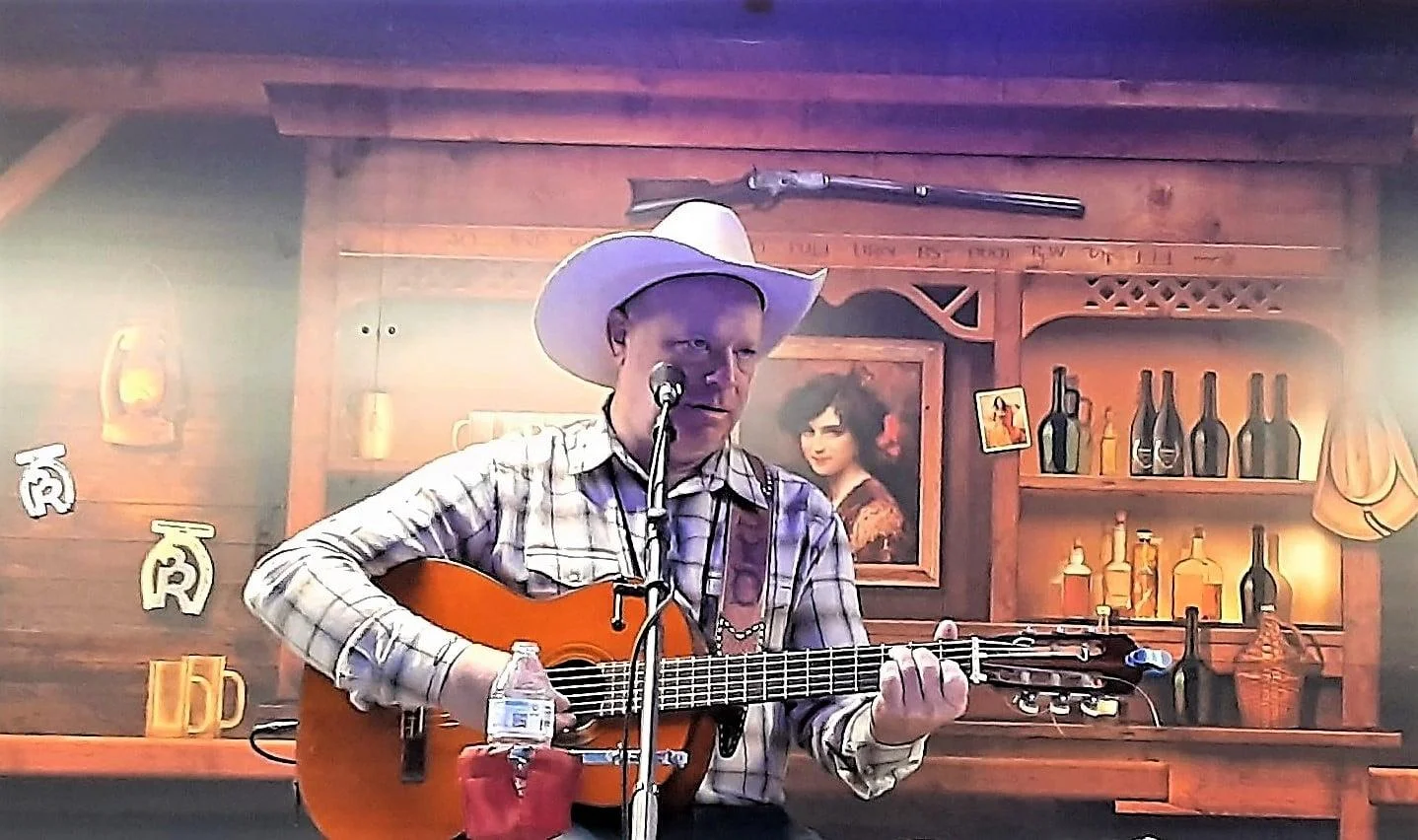
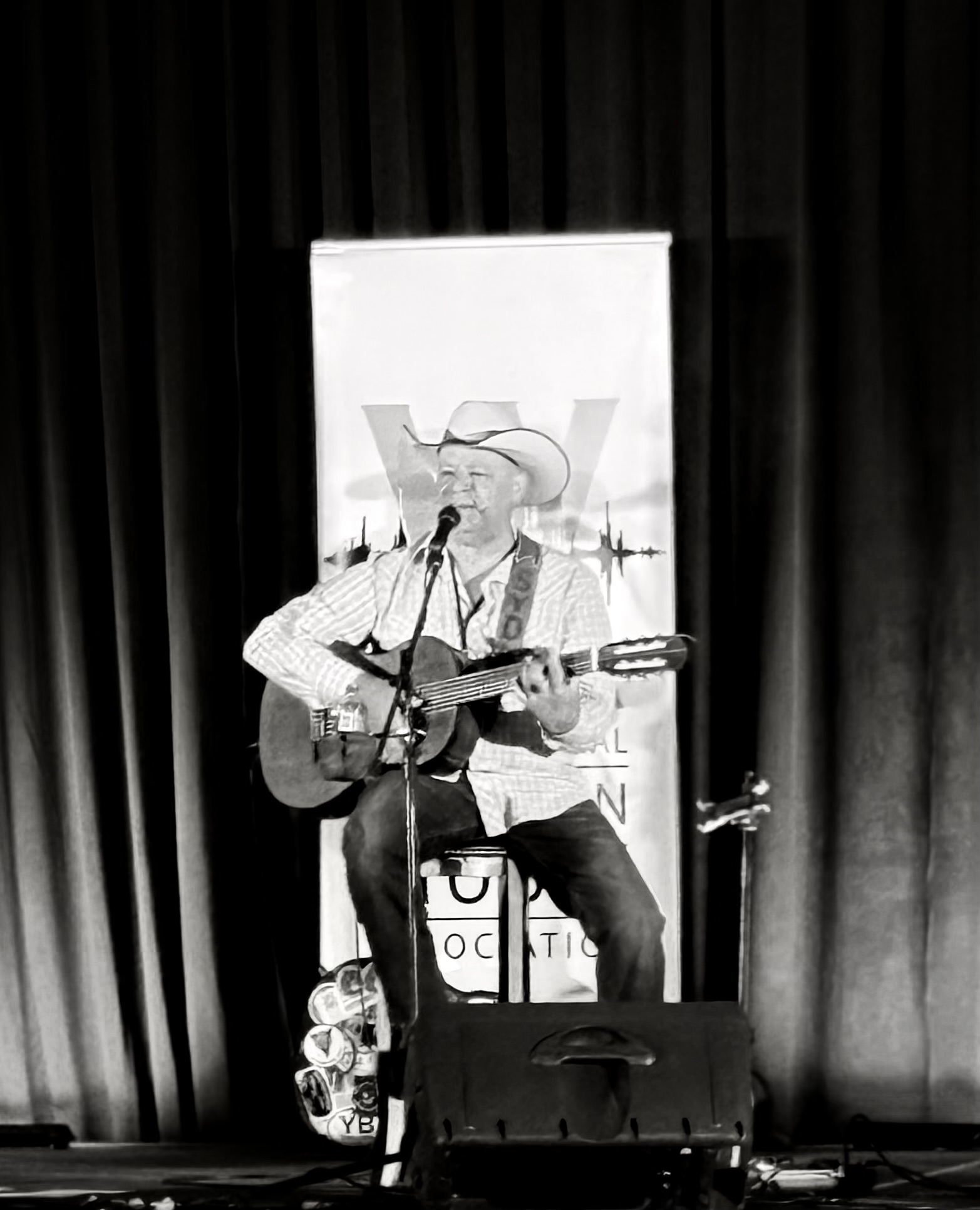 Syd Master performing Wednesday night at the IWMA. Photo by Brian Nixon
Then there was the gracious Executive Director, Marsha Short. Greeting me with her California-raised, Texas-living charm, Short’s love of the IWMA poured from her heart. “Leading up to the convention I get a little tired. But when I get here, I just love it—the people and place!” With names such as Gene Autrey connection to IWMA’s history—it has a storied past, but it’s future looks bright, encompassing various Americana genres.
The hotel corridors were lined with the scent of leather and the gleam of silver. Old-world craftsmanship met the hum of new conversations. Western boutiques displayed hats and tooled belts, while artisans proudly showed the work of their hands. From the speakers came a voice—high, lonesome, and clear—singing of cattle drives and open skies, of living “deep in the heart of Texas.” Boots echoed across tile floors. Someone laughed and said, “We’re all duded up.”
Time, it seemed, had paused its steady march. And I was glad to linger there awhile.
Thursday night brought Hot Club of Cowtown, the Austin trio whose nimble musicianship could scorch the ground beneath your feet. Their blend of swing and virtuosity set the room alight. The Hot Club of Cowtown were inducted into the International Western Music Association’s Hall of Fame during the evening, a recognition for their musical contribution and influence on Americana culture, which includes associations with Bob Dylan, Willie Nelson, and the Mavericks.
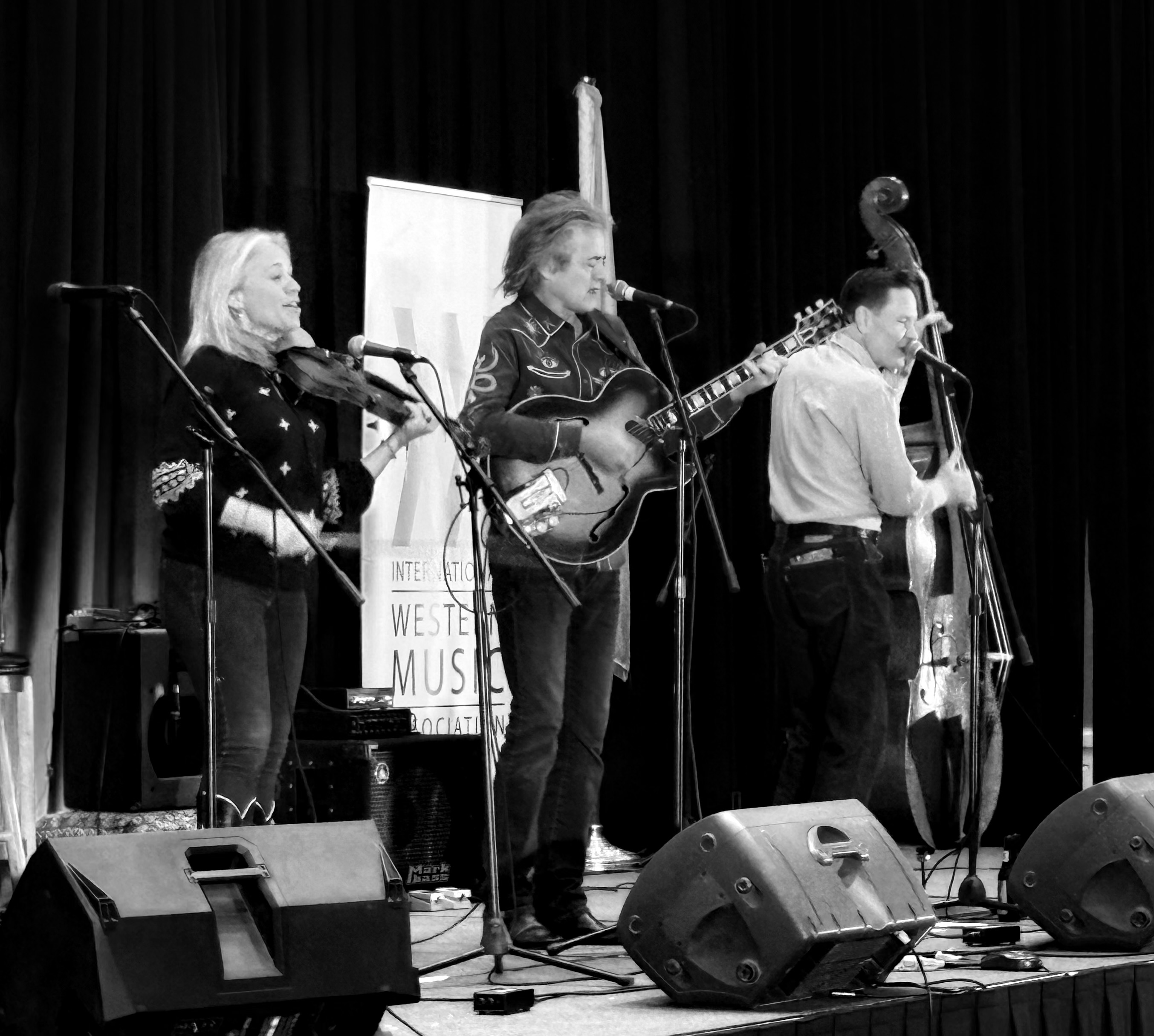 The Hot Club of Cowtown performing Thursday. Photo by Brian Nixon
On Friday came the Opry, hosted by Roger and Leo Eilts, a gathering that felt equal parts revival and homecoming. There, some of the finest Western musicians and poets in the nation offered their song and verse to a crowd that knew their cultural references and sentiment by heart.
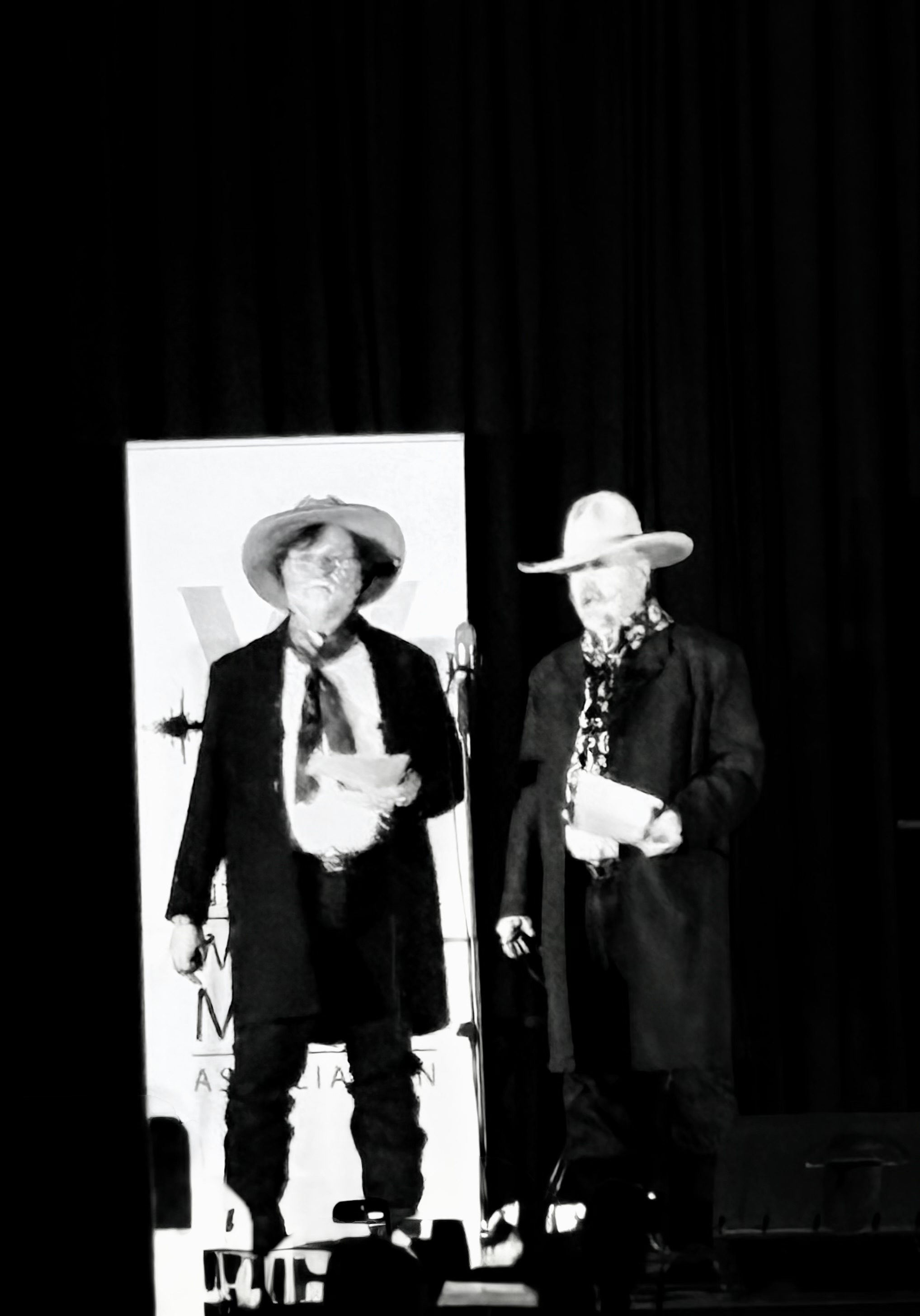 Roger and Leo Eilts hosting the Opry, Friday. Photo by Brian Nixon
Among the gray hair there were children and teenagers, demonstrating the cowboy way won’t wander far from its Western soil. For faces of the future, look no further than the Arizonia Wildflowers, a sibling quartet, ages 11-17. After their performance of sun-soaked swing, the tight three-part harmony, bass, violin, guitar and mandolin, won the audience over.
With workshops, guest speakers, and lots of performances—it was, in every sense, a splendid week—an immersion in the enduring spirit of the American West.
Yet my own trail led toward the poetry.
Having attended several years of readings at the convention, I’ve come to admire the homestyle eloquence of cowboy verse—the easy rhythm, the openhanded humor, the way a single stanza can break your heart and mend it again. Cowboy poetry carries the cadence of saddle leather and prairie wind, the plainspoken wisdom of a people who’ve learned to listen to both silence and sky.
Before the Opry, I sat down with poet Ron Wilson (Poet “Lariat”) to talk about that craft—and the calling behind it.
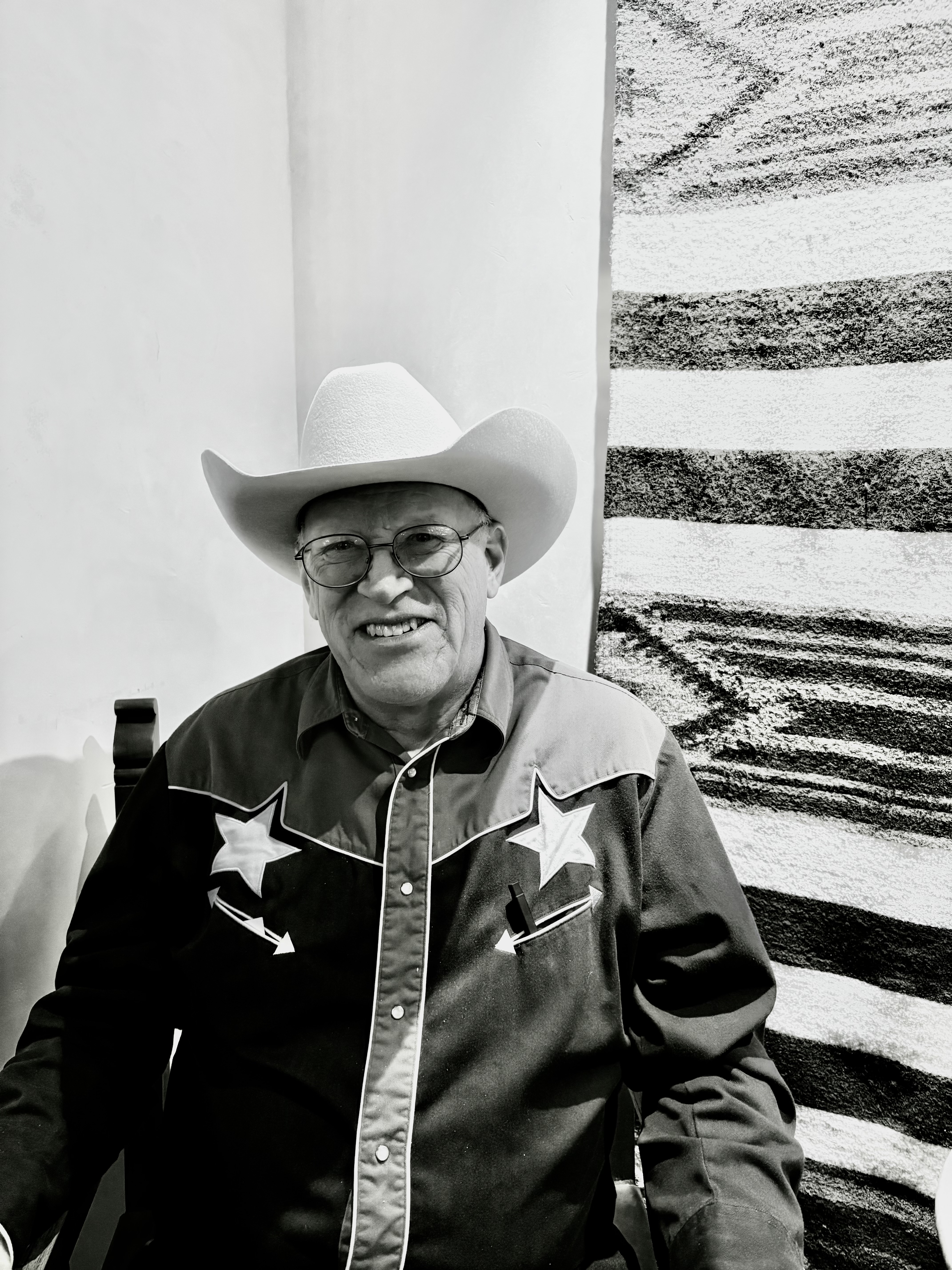 Poet, Ron Wilson. Photo by Brian Nixon
When did you first encounter cowboy poetry?
I grew up on a ranch with a family of storytellers but never paid attention to cowboy poetry until the 1990s. I was at a conference in Colorado and the evening entertainment was a cowboy poet. He was so entertaining that I started writing and performing after that.
 Poetry reading on Saturday morning. Photo by Brian Nixon
Was there a particular poet who caught your attention—someone whose words first bridged ranch life and art?
Baxter Black wrote a weekly column in a farm newspaper named Grass & Grain that serves our region. It was excellent and when I saw him perform in person, he was amazing! I got acquainted with him on the circuit and considered him a friend. Unfortunately, he passed in 2022. I’m proud to say my biweekly column, Cowboy Up, now appears in Grass & Grain.
Your biography reads like a trail map of American experience: FFA officer, farm radio broadcaster, college lecturer, Congressional staffer, association executive, rural development director, corporate vice president, small business co-founder, rodeo ticket-taker, Sunday School teacher, diaper changer, bottle washer, tractor driver, posthole digger, and more. How do these many lives weave into your poetry?
Multiple perspectives are always valuable, but I believe the best cowboy poetry comes from authentic cowboy experience. We have a saying on the ranch, when things go wrong— “Well, at least we can get a cowboy poem out of this.”
How does a gathering like the IWMA nurture a cowboy poet’s voice?
It’s great to be with other folks with a passion for the American cowboy. There is so much talent at IWMA it is amazing, and the Western Wordsmiths chapter specifically provides excellent and inspiring peer support for poets, writers, and lyricists. Our Western Wordsmiths theme this year is “The Power of Words: Heritage, Creativity, Service.” We aspire to honor our western history and enhance the creativity of our members. Words do have the power to entertain, uplift, and inspire us.
And finally—what advice would you offer to a budding cowboy, or any poet, learning to find their own rhythm beneath a vast and changing sky?
First, read! Read other poets, western history, and great literature. Then, engage and commit to continuous improvement. Find a supportive group such as Western Wordsmiths or local writer’s clubs to help improve one’s craft. After that, it goes back to Nike: Just do it! Find opportunities to get in front of audiences, whether a family reunion or local Lions club. The more you perform, the better you’ll get and the more fun you have. It can be a great ride!
To learn more about Ron Wilson, visit lazytranchadventures.com.
For more on the International Western Music Association, visit iwesternmusic.org.
Brian C. Nixon, Ph.D., is Chief Academic Officer and professor at Veritas International University in Albuquerque. As a writer, musician, and artist, his interests surround the philosophical transcendentals: truth, beauty, and goodness. You can contact Brian via his Bandcamp email address: https://briancharlesnixon.bandcamp.com