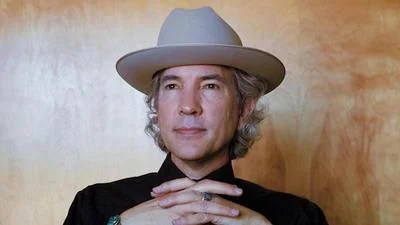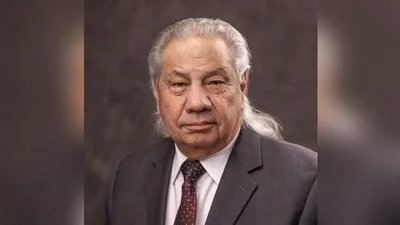
Thomas Grover, a former sergeant with the Albuquerque Police Department (APD), said that he left the force due to politicized discipline during the Department of Justice (DOJ) era, which he claims forced officers to remain silent about command staff misconduct. He made these remarks on a podcast.
"Around 2009-2010, the APD administration was highly politicized, focusing on appeasing the DOJ by unfairly disciplining good officers who violated minor administrative rules during effective police work, while protecting others," said Grover. "This disparate treatment violated my sense of fairness, and I refused to stay silent on high-profile command staff misconduct, choosing to honor my oath by leaving for law school rather than compromise. As a union rep, I saw officers crucified for doing their jobs well, which eroded trust and morale."
Grover's narrative is set against the backdrop of the years leading up to the U.S. Justice Department's investigation into APD. According to federal officials, a pattern-or-practice probe was initiated following a series of controversial shootings and community complaints regarding excessive force. By April 2014, the DOJ concluded that APD had engaged in a pattern of unconstitutional force, leading to a detailed findings letter and subsequently, a negotiated settlement agreement and consent decree aimed at overhauling policies, training, and internal accountability. Grover's depiction of politicized discipline and scapegoating aligns with this turbulent pre-consent-decree period when city leaders were under intense federal scrutiny.
The DOJ’s 2014 findings letter documented how severe the situation had become. Investigators found that from 2009 to 2012, APD officers were involved in 20 fatal shootings, concluding that "a majority were unconstitutional," noting that officers "too often use deadly force" frequently against individuals experiencing mental-health crises. The report cited systemic failures in internal investigations, supervision, and discipline that allowed problematic practices to persist. These years overlap with Grover's account of an administration more focused on optics and punishing selected officers than on consistent accountability for all ranks.
The federal response reshaped APD for nearly a decade. In November 2014, the city and DOJ entered into a Court Approved Settlement Agreement requiring approximately 300 policy changes, extensive use-of-force reporting, body-worn cameras, and an independent monitor to track compliance. Over nine years, reports indicated APD nearing or reaching 99% compliance; by May 2025, a federal judge formally dismissed the CASA (Court Approved Settlement Agreement), ending DOJ oversight after an estimated $40 million in reform costs. Grover’s critique underscores that while reforms aimed at constitutional policing were implemented, the process often felt arbitrary and politicized for line officers caught in between.
Thomas Grover is now an Albuquerque attorney specializing in police practices, civil rights, employment law, and professional-licensing defense. His biography highlights his extensive experience in internal affairs and use-of-force reviews during his time at APD. After leaving the department, Grover earned his law degree from the University of New Mexico and founded Grover Law LLC. He frequently represents officers in disciplinary and criminal matters while publicly commenting on reform efforts, consent decrees, and due-process protections for law enforcement professionals.